

Small-cap stocks have significantly lagged large caps for years, but a combination of improving liquidity, historic valuation gaps, positive earnings revisions, and a recent surge in market breadth suggests a potential breakout is forming. This article breaks down the data, explains why small caps may be on the edge of a major multi-year rally, and provides actionable insights for investors seeking to capitalize on one of the market’s most overlooked opportunities.
Could Small Caps Finally Be Ready for a Long-Awaited Boom?
For the past four years, small-cap stocks have been overshadowed by the massive performance of megacap tech. The Russell 2000 underperformed dramatically as investors poured capital into tech giants like NVIDIA, Apple, Microsoft, and Meta—leaving small caps in the dust. Many investors gave up on them entirely.
But markets move in cycles.
And after years of stagnation, the small-cap cycle may finally be turning.
Investors, analysts, and market strategists are now asking the same question:
“Is this the moment small caps finally explode?”
A powerful set of signals—some of which investors have been waiting on for years—indicate that the answer may be: yes.

Why Have Small Caps Struggled for So Long?
Understanding why small caps underperformed helps explain why a reversal could be so powerful.
Small caps were hit harder than large caps for several reasons:
1. Rising Interest Rates Hit Small Companies Hardest
Small companies rely more heavily on borrowing than large firms. When interest rates surged in 2022–2023, debt servicing costs skyrocketed.
2. Inflation Crushed Margins
Small caps generally lack the pricing power enjoyed by large, established corporations.
3. Market Hype Ignored Small Caps Entirely
AI, cloud, and tech mega-stocks absorbed almost all market attention and capital. Investors preferred high-growth giants over small, overlooked businesses.
4. Liquidity Conditions Tightened
The Fed’s shift from QE (Quantitative Easing) to QT (Quantitative Tightening) removed liquidity that small businesses depend on.
These challenges pushed small caps into a multi-year slump—creating one of the widest valuation gaps in decades.
But that gap may now be a rare opportunity.
What Has Changed in 2024–2025 That’s Turning the Small-Cap Tide?
A confluence of powerful macro and micro signals is emerging. Here’s what’s different now:
1. The Fed Has Paused and Slowed Its Tightening Cycle
Even without immediate rate cuts, the mere stabilization of interest rates eases pressure on small companies. Historically, small caps outperform in the 12–24 months following a Fed pause.
2. The Valuation Gap Has Reached Extreme, Historic Levels
According to Bank of America, small caps are trading at valuation discounts not seen since the early 2000s and post-2009 lows.
- Small caps are cheap relative to earnings
- Cheap relative to book value
- And extremely cheap relative to large caps
Whenever valuations reached such extremes in the past, small caps went on to outperform the S&P 500 by 30–50% over the next 3–5 years.
3. Earnings Are Finally Turning Around
For the first time in years, analysts are raising earnings estimates for small-cap companies. This is a major reversal from the pessimism of 2022–2023.
4. Liquidity Is Improving
Small businesses feel every shift in lending conditions.
Real-life example:
Regional banks and lenders that tightened up credit in 2023 have begun easing standards again in mid-2024 and 2025. This alone can accelerate small-cap performance.
5. The U.S. Manufacturing Boom Is Fueling Small-Cap Demand
With reshoring accelerating, many small industrials, materials suppliers, component manufacturers, and logistics firms are seeing rising orders.
Small caps benefit more from domestic growth than global tech giants do.
The Signal Investors Have Waited Years For: A Small-Cap Breadth Thrust
One of the most powerful technical indicators supporting a small-cap explosion is the breadth thrust.
A breadth thrust occurs when:
- A significant majority of stocks
- Move above key moving averages
- Over a very short time period
This indicates a broad, powerful rally driven by institutional buying—not a narrow tech-led move.
Recent data shows:
- Over 80% of Russell 2000 stocks moving above their 50-day average
- A spike in 3-month highs among small-cap sectors
- Increasing volume and accumulation
- Multiple days where small caps outperform large caps
Historically, when a breadth thrust occurs:
The Russell 2000 averages 20%–30% gains over the next 12 months.
Many small-cap sectors double within 2–3 years.
Breadth thrusts do not happen often—but when they do, they usually mark the beginning of a powerful trend.
Why Small-Cap Explosions Tend to Be Big and Fast
Small-cap rallies are typically far more explosive than large-cap rallies because:
1. Mean Reversion Is Violent
When stocks fall too far behind, they often snap back aggressively.
2. Fund Managers Must “Catch Up”
If fund managers remain underweight small caps during a rally, they risk massive underperformance. This creates forced buying.
3. Small Caps Are Priced for Disaster
Currently, many trade like recession is guaranteed—even though macro data is improving.
4. Improving Fundamentals Create Big % Moves
Small companies with improving earnings see outsized stock reactions.
5. Liquidity Returning Has an Outsized Impact
A little bit of available credit goes a very long way for smaller firms.
All of this creates a setup where small caps could outperform dramatically.
Which Small-Cap Sectors Could Lead the Surge?
Not all small caps will benefit equally. Here are the areas showing the strongest upside potential:
1. Small-Cap Value (Industrials, Financials, Materials)
These benefit most from economic stabilization and manufacturing trends.
2. Technology (Cybersecurity, Automation, Specialty Semiconductors)
Profitable niche tech firms—not speculative ones.
3. Healthcare & Biotech
Innovation cycles are restarting, and valuations are attractive.
4. Energy & Clean Tech
From exploration to renewable infrastructure, small-cap energy names stand to gain significantly.
5. Consumer Discretionary
As inflation cools and wage growth remains healthy, smaller retailers may rebound.
Diversification across these sectors helps capture broad upside.
Are Small Caps Too Risky? What Should Investors Watch Out For?
Yes—small caps come with heightened risk. But risk can be managed with smart strategy.
Key Risks
- Higher debt loads
- Slower cash flow cycles
- More sensitivity to economic downturns
- Higher volatility
- Lower liquidity
These risks are not deal-breakers—but they make selectivity crucial.
How Can Everyday Investors Position for a Potential Small-Cap Boom?
Here are practical, actionable steps investors can take:
1. Use Small-Cap ETFs to Gain Exposure
Diversify across hundreds of companies with ETFs like:
- IWM (Russell 2000)
- IJR (S&P 600)
- VIOV (Small-Cap Value)
- AVUV (Avantis Small Cap Value)
2. Favor “Quality” Small Caps
Look for companies that have:
- Positive earnings revisions
- Low debt ratios
- Strong cash flows
- Growing revenue
- Proven profitability
3. Include Small-Cap Value Exposure
Value small caps often outperform growth small caps in early economic recoveries.
4. Dollar-Cost Average
Smooth out volatility by investing systematically.
5. Avoid Extremely Speculative Penny-Style Small Caps
Stick to real companies with real business models.
Real-Life Examples of Explosive Small-Cap Rallies
Small caps have a remarkable history of outperforming after long periods of stagnation.
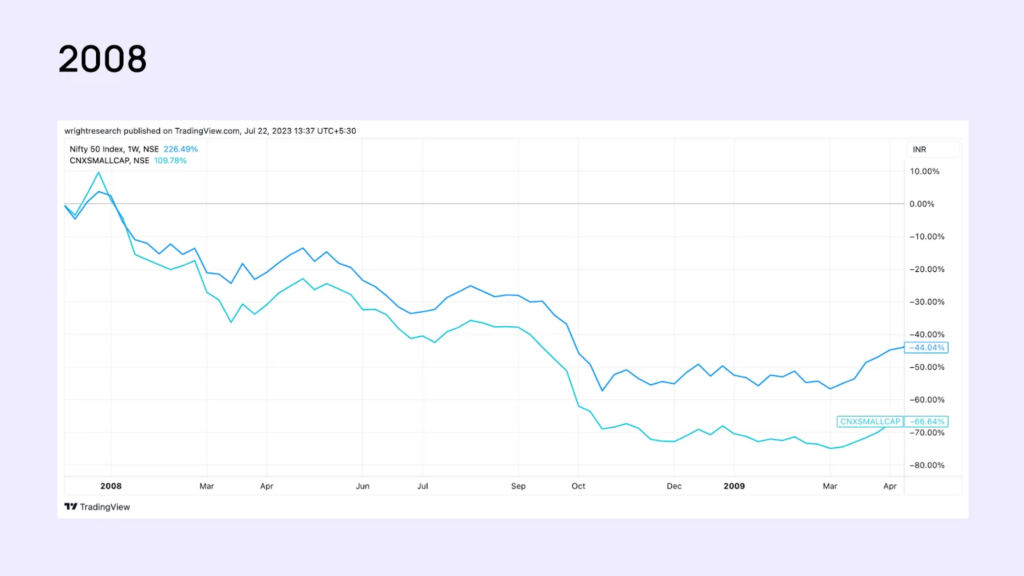
Post-2009 Financial Crisis
Small caps gained over 100% in the following 18 months.
2003 Recovery After the Dot-Com Crash
Small caps doubled in the 24 months following the rebound.
2016–2017 Rally
Small caps surged on tax reforms and domestic growth expectations.
History suggests that when small caps recover, the rallies tend to be both fast and large.
10+ Trending FAQs About Small-Cap Stocks
1. Why have small caps underperformed for years?
Because rising rates, inflation, and liquidity tightening hit small companies harder than large-cap tech giants.
2. What is the main signal that small caps might explode now?
A “breadth thrust,” combined with valuation extremes and improving liquidity.
3. Are small caps undervalued right now?
Yes—small caps are trading at massive discounts relative to large caps, near 20-year extremes.
4. Do small caps perform better after the Fed pauses rate hikes?
Historically, small caps strongly outperform in the 6–18 months following a Fed pause.
5. Are small caps riskier than large caps?
Yes, but they also offer much higher long-term return potential.
6. Which small-cap sectors look strongest?
Industrials, financials, tech, healthcare, energy, and consumer discretionary.
7. Should new investors use small-cap ETFs?
Yes—ETFs like IJR, IWM, and AVUV reduce individual stock risk.
8. Will small caps outperform large caps in 2025?
If liquidity conditions improve and earnings rise, small caps may finally outperform.
9. Are small caps good for long-term investing?
Yes—small caps have historically delivered strong returns over 5–10 year periods.
10. How long should you hold small caps?
A 3–7 year timeframe is ideal due to volatility and economic cycles.
11. Can small caps benefit from reshoring and manufacturing trends?
Absolutely—many small industrials and suppliers stand to benefit significantly.
Final Takeaway: Are Small Caps About to Explode?
The setup is stronger than it has been in years.
- Valuations are historically cheap
- Liquidity conditions are improving
- Earnings trends are reversing
- Technical signals are flashing green
- Market breadth is expanding
- Institutional money is quietly rotating
Small caps have been ignored, underowned, and undervalued.
But that may be exactly why the next massive opportunity lies in this forgotten corner of the market.
When small caps break out, they don’t just move—
they explode.
This might be the beginning of that long-awaited moment.